
Influencer Attribution: Using Your POS to Finally Prove That Viral Post Worked
Updated: Mar 4
You paid an influencer. The post went viral. The likes rolled in. The comments were buzzing. Your follower count jumped.
But did anyone actually buy anything from your shop?
If you run a brick-and-mortar store, whether it's a café, boutique, or retail space, you've probably asked yourself this exact question. And if you're honest, you've probably just shrugged and said, "I think it worked?"
That's the problem. You shouldn't have to guess.
The Frustration: "I Spent $2,000 and Got... What Exactly?"
Here's the classic scenario: You partner with a local influencer who has 50K followers. They post about your new range. The post gets thousands of likes, hundreds of comments, and a solid share count. Your social metrics look fantastic.
Then you check your sales data. It's... fine? Maybe a bit higher than usual? Hard to say. Was it the influencer? Was it the weekend rush? Was it just good timing?
You've spent real money on that campaign, but you've got no solid proof it translated into customers walking through your door and tapping their card at the counter.
This is the "Missing Link" problem. Social media gives you engagement data. Your POS gives you sales data. But there's a massive gap between someone double-tapping a post and actually showing up to buy something.
For hospitality and retail owners, that gap is costing you. You're making marketing decisions based on vibes instead of facts.
The Missing Link: What Happens Between the Scroll and the Sale
The reality is, customer journeys are messy. Someone sees a viral TikTok about your coffee shop on a Tuesday morning. They save the post. They show it to a mate. They forget about it. Then three weeks later, they're in the area and think, "Oh yeah, that place looked cool." They walk in, order a flat white, pay, and leave.
From your perspective? You have no idea that TikTok sent them. They didn't mention it. They didn't use a promo code. They just looked like another regular customer.
Traditional attribution tools: UTM links, promo codes, affiliate tracking: work brilliantly for e-commerce. But they fall apart when the final transaction happens offline. And let's be real: most customers don't bother with discount codes anyway. They're already at your counter. Why would they pause, pull out their phone, and hunt for a code to save $2?
This is where smart POS systems come in. They're the bridge. The missing piece. The thing that finally lets you connect the dots between digital buzz and physical sales.
How Smart POS Systems Close the Loop
Modern POS systems aren't just tills anymore. They're data engines. And when integrated properly, they can track attribution in ways that were impossible a few years ago.
Here's how the magic happens:
Unique QR Codes and Links You give each influencer a unique QR code or branded short link. They include it in their post or Story. When a customer scans it, the system logs that interaction: even if they don't buy anything right away. Later, when that same customer walks into your store and pays with their card, the POS can match the transaction to the original QR scan through card-linked attribution or loyalty programme data.
Card-Linked Offers This is where fintech meets retail brilliance. Instead of making customers remember a promo code, you tie offers directly to their payment card. The influencer promotes a "Tap Your Card for 10% Off" deal. When the customer pays in-store, the POS recognises the linked card and applies the discount automatically. More importantly, it logs that transaction as an influencer-driven sale.
Post-Purchase Surveys Some POS systems now prompt customers at checkout (via email or SMS receipt) to answer a quick question: "How did you hear about us?" If they select the influencer's name, that data flows straight back into your attribution reports. It's simple, but surprisingly effective.
Extended Tracking Windows Here's the thing: people don't buy immediately. Someone might see your influencer's post on Monday and visit your shop on Saturday. Smart POS systems extend attribution windows to 60 or even 90 days, capturing those delayed conversions that older systems would miss entirely.
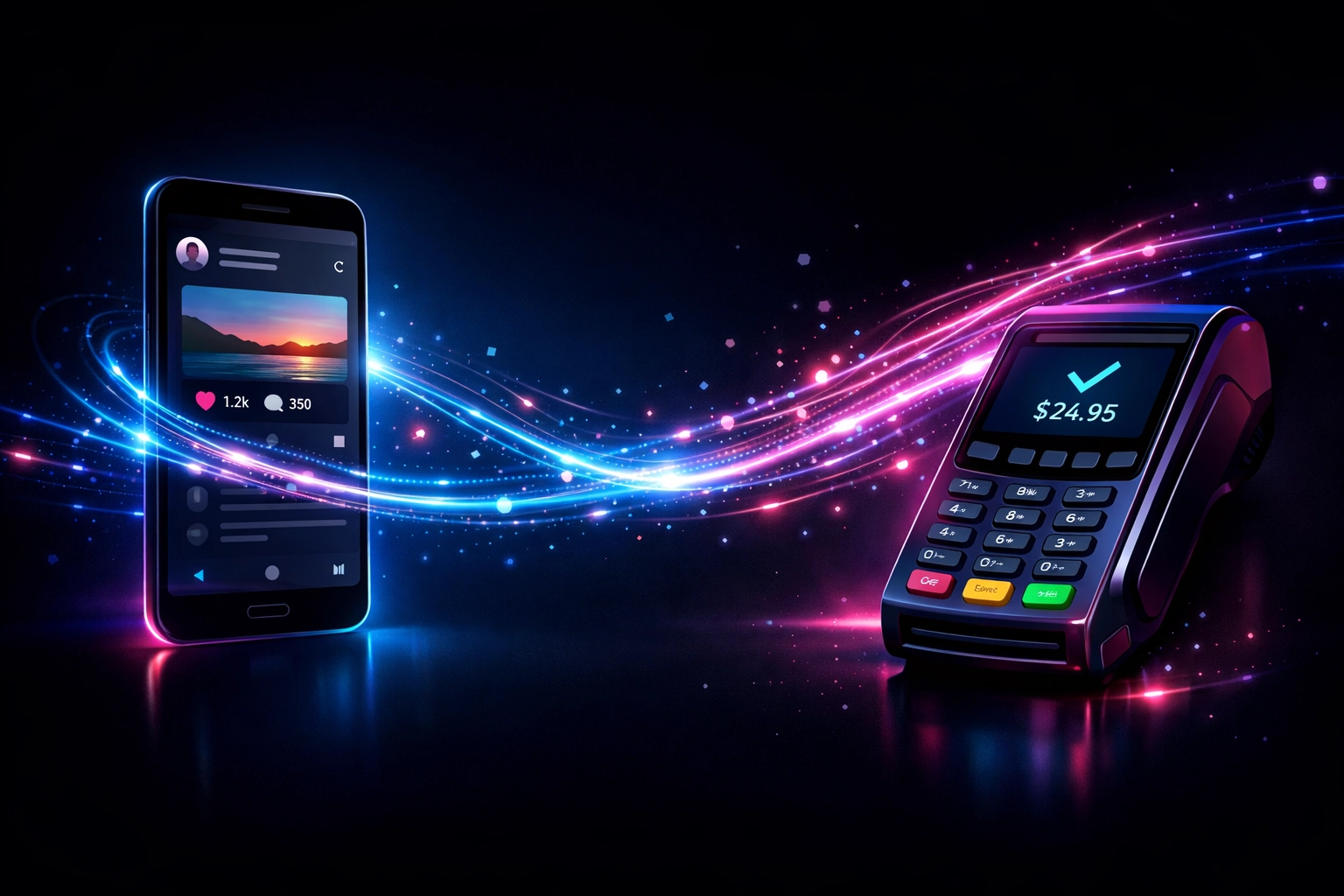
From Likes to Taps: Measuring Real Conversions
Let's talk metrics. Social media loves to throw numbers at you: reach, impressions, engagement rate, follower growth. These are fine. They're not useless. But they're also not money.
What matters is the tap. The actual transaction. The moment someone hands over their card and buys something.
Smart POS attribution shifts the conversation from vanity metrics to revenue metrics. Instead of celebrating 10,000 post views, you're tracking:
Foot traffic lift: How many more people walked through your door during and after the campaign?
Transaction count: How many sales were directly linked to the influencer's unique code or card offer?
Average basket size: Did influencer-driven customers spend more or less than your average customer?
Repeat purchase rate: Did those customers come back? That's the real gold.
This is the difference between "engagement theatre" and actual business growth. You're not chasing likes anymore. You're tracking conversions. And conversions pay the bills.
Data-Driven Decisions: Know Which Influencers Actually Work
Here's where it gets really powerful. Once your POS is tracking attribution properly, you can start making smarter decisions about who to work with.
You might discover that the influencer with 100K followers drove 12 customers, while the micro-influencer with 8K followers drove 47. That changes everything. You stop paying for follower count and start investing in actual reach: the kind that gets people through the door.
You can also identify patterns. Maybe the influencer's followers prefer weekend visits. Maybe they spend more on specific product categories. Maybe they're more likely to become regulars. All of this data lives in your POS, waiting for you to act on it.

The best part? You're not guessing anymore. You're not saying "I think this worked." You're saying "This influencer drove $3,200 in sales with a $600 campaign spend. Let's do it again."
That's the power of closing the loop.
The Role of RivaTech Consulting: Making It Seamless
Here's the catch: setting up this kind of attribution isn't always straightforward. You need the right POS system. The right payment integrations. The right tracking infrastructure. And you need it all to work together without creating friction for your customers or your staff.
That's where RivaTech Consulting comes in.
We help businesses like yours navigate the messy world of payments strategy and POS selection. Whether you're upgrading an existing system, integrating card-linked offers, or building out a full attribution stack, we make sure the pieces fit together properly.
We work with POS providers, fintechs, and payment platforms to design solutions that actually solve your problems: not just add more dashboards. And because we specialise in the intersection of payments and digital strategy, we understand how to bridge that gap between viral posts and physical sales.
If you're tired of guessing whether your influencer campaigns are working, it's time to get serious about attribution. Get in touch with us and let's build a system that proves your marketing is worth it.
The Bottom Line
Influencer marketing isn't going anywhere. But the days of paying for "exposure" and hoping for the best? Those need to end.
Your POS system is the missing link. It's the tool that finally lets you track the full customer journey: from the scroll to the sale. From the viral post to the tap at the counter.
Stop guessing. Start measuring. And start making marketing decisions based on actual revenue, not just likes.
Because at the end of the day, engagement is great. But conversions pay the rent.