
The End of the Junk Food Machine? How Fresh Food Tech is Taking Over
Updated: Feb 14
Remember when grabbing something from a vending machine meant stale chips, questionable chocolate bars, or a sad-looking sandwich that'd been sitting there since last Tuesday? Yeah, those days are numbered.
The clunky, coil-dispensing junk food machines we've all reluctantly used are being replaced by something much smarter: and much fresher. Welcome to the age of smart fridges, where AI does the heavy lifting and your lunch actually looks (and tastes) like food.
The Death of the Traditional Vending Machine
Let's be honest: traditional vending machines were never designed for fresh food. Those spiralling metal coils were built for packaged goods that could survive a nuclear winter: not a quinoa bowl or a Caesar salad. The moment you tried to stock anything perishable, you were gambling with food safety, waste, and a whole lot of angry customers.
But the bigger problem? The tech was ancient. Operators had no idea what was selling, what was expiring, or when to restock. They'd drive out to a location, open the machine, and play a guessing game with inventory. It was inefficient, wasteful, and expensive.
Fast-forward to 2026, and the entire model is being flipped on its head.
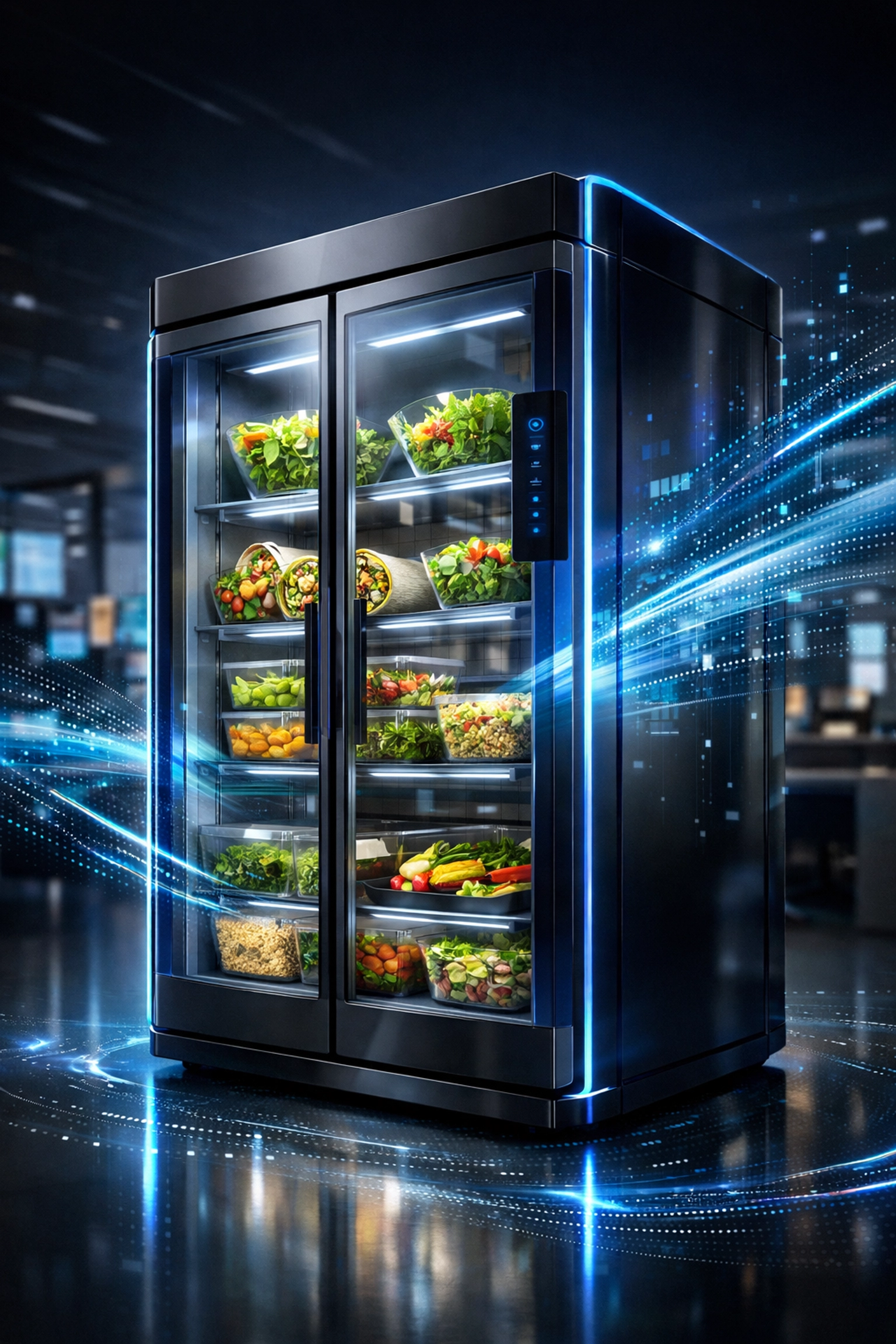
Enter the Smart Fridge: No Coils, No Coins, No Worries
Smart fridges: or "automated micro-markets" if you want to sound fancy: are popping up everywhere. Offices, gyms, hospitals, train stations, universities. Anywhere people need quick access to fresh, quality food without the hassle of a full café or kiosk.
Here's how they work: you walk up, open the fridge (often by tapping your phone or card), grab what you want, and… that's it. The fridge knows what you took. It charges you automatically. No buttons, no scanning, no queues.
The secret? AI-powered cameras and weight sensors inside the fridge track every item removed in real-time. The system recognises a chicken wrap versus a tuna salad, calculates the price, and processes payment seamlessly through your linked account or app.
It's retail without the friction: and it's changing the game for fresh food access.
The Tech Powering the Revolution
Smart fridges aren't just "fancy refrigerators." They're mini retail ecosystems powered by some seriously clever technology.
AI and Computer Vision
Cameras inside the fridge use computer vision to identify each product. When you grab that avocado smash sandwich, the system "sees" it, recognises it from its database, and logs the transaction. No barcodes. No manual input. Just grab and go.
IoT and Real-Time Inventory
These fridges are connected to the cloud. Operators can monitor stock levels, sales trends, and temperature remotely from anywhere. If the fridge is running low on salads at 2pm on a Wednesday, the system alerts the restocking team automatically. No more guessing. No more wasted trips.
Predictive Analytics
Here's where it gets really interesting. The AI doesn't just track what sells: it predicts when things will sell. By analysing historical data, weather patterns, and even office events (like that big meeting everyone's dreading), the system can forecast demand and optimise restocking schedules.
Less waste. Lower costs. Happier customers.
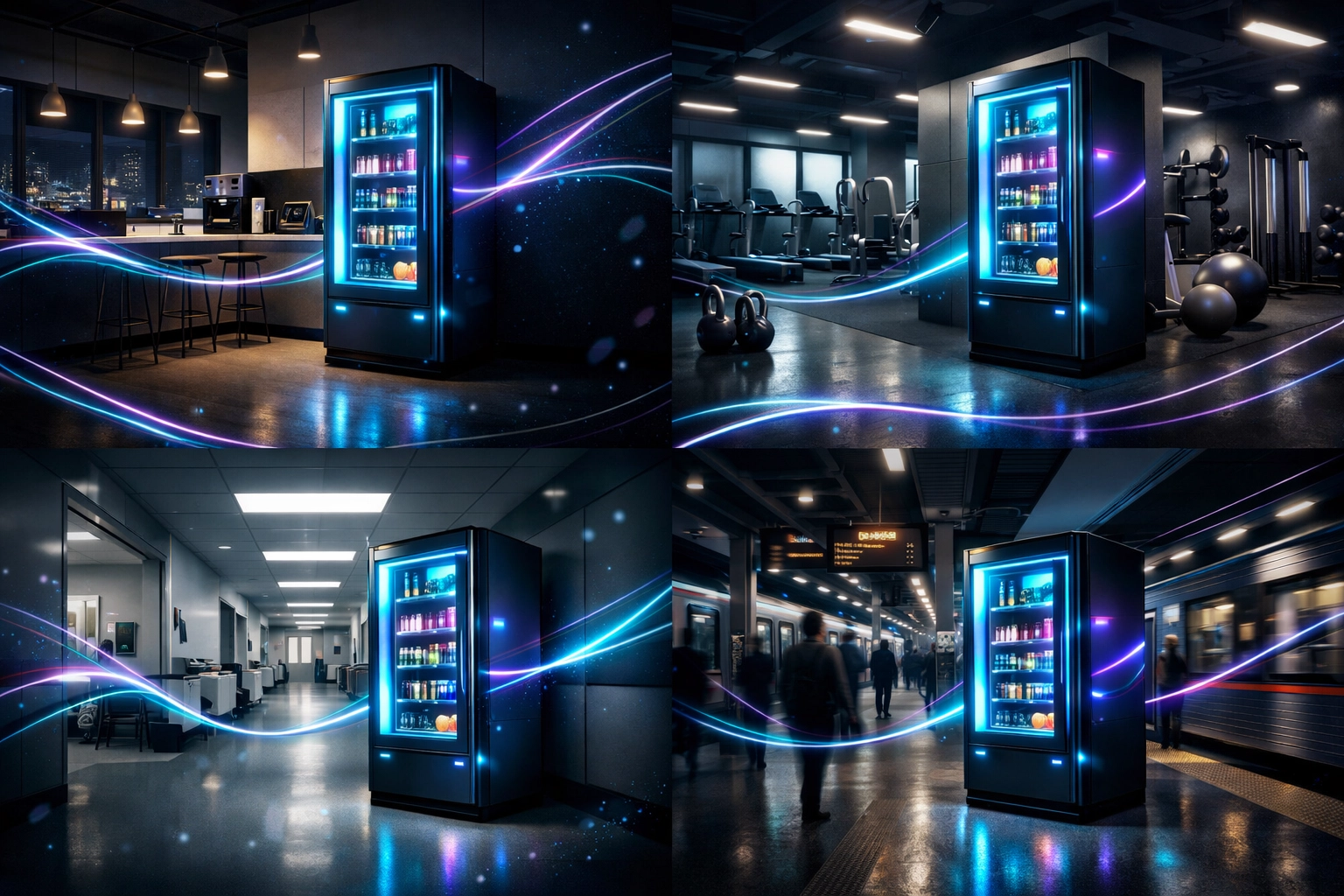
Where Smart Fridges Are Thriving
Corporate Offices
The 9-to-5 crowd loves these things. Instead of queuing at the café downstairs or settling for stale sandwiches from the tearoom, workers can grab a fresh poke bowl or protein box in seconds. Employers love them too: it's a low-cost employee perk that actually gets used.
Gyms and Fitness Centres
Post-workout nutrition is big business, and smart fridges are cashing in. Instead of lugging a Tupperware container or paying $15 for a sad smoothie at the juice bar, gym-goers can grab a pre-portioned meal or snack on their way out.
Hospitals and Universities
24/7 operations mean 24/7 hunger. Smart fridges provide round-the-clock access to fresh food for nurses on night shifts or students cramming for exams. No need to rely on whatever's left in the hospital canteen at 3am.
Transit Hubs
Airports, train stations, and bus terminals are prime real estate for smart fridges. Travellers want quick, healthy options: not overpriced fast food or mystery meat pies. These fridges fit perfectly into high-traffic, low-space environments.
The Sustainability Angle: Less Waste, More Impact
One of the biggest wins with smart fridges? Dramatic reductions in food waste.
Traditional vending relied on guesswork. Operators would overstock to avoid running out, leading to tonnes of expired food being tossed. With smart fridges, predictive analytics mean you're only stocking what will actually sell. Items nearing expiry can be flagged for discounts or donations.
The environmental benefits extend beyond waste reduction. Many smart fridge operators are partnering with local suppliers and focusing on sustainable packaging. Some are even experimenting with refillable containers: imagine grabbing your lunch in a reusable bowl, then returning it for your next meal.
It's not just about selling food. It's about selling better food, more responsibly.
The Payment Strategy Behind the Magic
Here's where things get interesting from a business and payments perspective: and where RivaTech Consulting's expertise comes into play.
Making "unattended retail" work isn't just about cool hardware. It's about creating a seamless, secure payment experience that doesn't require a staff member standing there with a card reader.
Frictionless Payments
Smart fridges integrate with digital wallets, tap-to-pay cards, and proprietary apps. Some even support account-based payments, where your employer or gym subsidises purchases, and the fridge automatically deducts from your allocated balance.
The key is speed and simplicity. Any friction: an extra tap, a failed transaction, a clunky interface: will drive users away. Payment systems need to be invisible, reliable, and fast.
Data and Compliance
These systems handle sensitive payment data, which means they need to be PCI-DSS compliant and built with security in mind. Operators also need to manage chargebacks, refunds, and disputes: all without a human cashier to smooth things over.
Then there's the data goldmine. Every transaction generates insights: what sells, when it sells, who's buying. Smart operators use this data to refine their offerings, negotiate with suppliers, and even pilot new products in specific locations.
Settlement and Reconciliation
With multiple payment methods, high transaction volumes, and often low average basket values (think $5-$15 per purchase), operators need efficient settlement and reconciliation systems. Payment platforms need to handle micro-transactions at scale without eating into margins through fees.
This is where having the right payments partner and strategy becomes critical. It's not just about "accepting payments": it's about optimising every layer of the transaction flow to make the business model viable.
Challenges Still to Solve
Smart fridges aren't perfect: yet.
Tech Failures
What happens when the camera glitches and thinks you took two salads instead of one? Or when the fridge door doesn't register that it closed? Operators need robust customer support systems and clear refund processes to handle these hiccups.
Upfront Costs
The hardware and software powering these fridges aren't cheap. For small operators or startups, the upfront investment can be a barrier. However, as the technology matures and scales, costs are dropping fast.
Consumer Trust
Some people are still wary of "just walking out" without scanning or paying at a terminal. Building trust requires clear communication, transparent pricing, and reliable technology. One bad experience can sour a customer for good.
What This Means for Businesses
If you're in retail, hospitality, or facilities management, the smart fridge revolution is worth paying attention to. These aren't just vending machines 2.0: they're a glimpse into the future of unattended retail and on-demand convenience.
But success in this space requires more than just buying a fridge and stocking it with food. You need:
The right payment infrastructure to handle seamless, secure transactions
Data analytics to optimise inventory and reduce waste
Partnerships with suppliers who can deliver fresh, quality products consistently
Customer support systems to handle issues quickly and professionally
Getting all these pieces to work together is no small feat. That's where expert guidance makes the difference.
Ready to Explore Smarter Retail Solutions?
The shift from junk food machines to AI-powered fresh food fridges is just the beginning. As payment technology evolves and consumer expectations rise, businesses that embrace innovation will lead the pack.
At RivaTech Consulting, we help businesses navigate the intersection of payments, technology, and strategy. Whether you're exploring unattended retail models, optimising your payment flows, or figuring out how to make fresh food vending work at scale, we've got you covered.
Let's chat about how we can help you stay ahead of the curve.